Practical Effects vs. CGI in Movies: The Technical Evolution of Visual Effects
The Evolution of Practical Effects in Modern Cinema: CGI vs. Reality
When audiences watched a massive T-Rex break through the fence in 1993’s Jurassic Park, the terror felt visceral. The rain interacting with the dinosaur’s skin was real because the dinosaur was physically there—a massive animatronic puppet. Today, blockbusters build entire universes out of digital pixels. But as technology advances, the conversation among filmmakers is no longer about choosing one method over the other; it is about how to successfully merge them.
Practical effects are physical, real-world techniques used during filmmaking, such as animatronics, miniatures, and prosthetics, unlike CGI which is generated post-production. Directors increasingly blend both methods, using practical effects to ground actors’ performances while relying on CGI for scale and digital environments.
Quick Takeaways
-
Physical Gravity: Practical effects obey real-world physics, capturing authentic lighting, gravity, and shadows automatically.
-
The Post-Production Shift: Computer-Generated Imagery (CGI) shifted visual effects budgets from pre-production (building sets) to post-production (rendering servers).
-
The Hybrid Solution: Modern cinematic masterpieces like Mad Max: Fury Road use physical stunts enhanced, rather than replaced, by CGI.
-
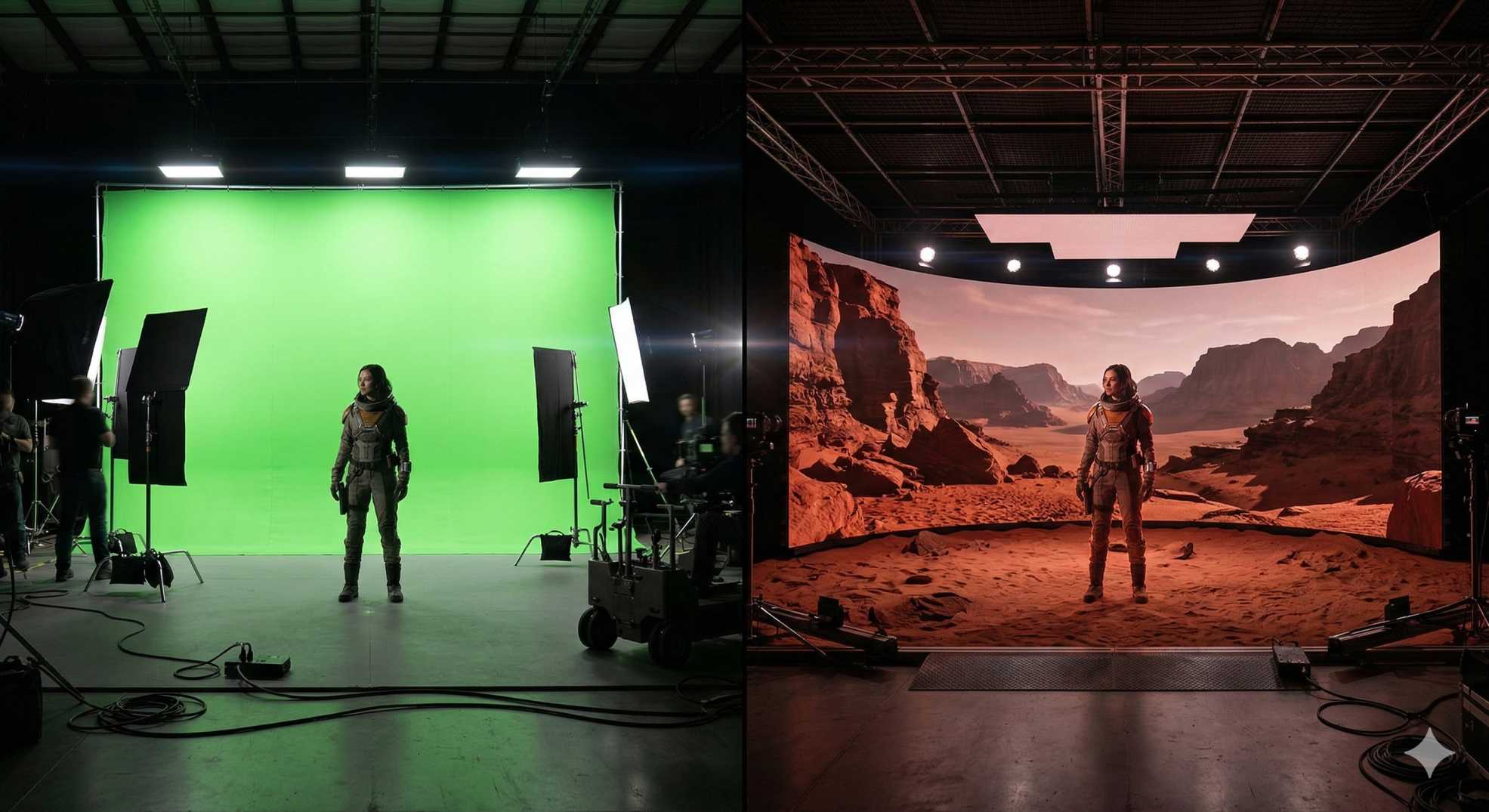
Virtual Production: LED walls (The Volume) have created a new category that blurs the line between physical set pieces and digital backgrounds.
The Missing Insight: The LED Virtual Production Bridge
Most debates surrounding practical effects vs CGI in movies treat the two techniques as mortal enemies. They miss the ultimate technological bridge: “Volume” virtual production. Pioneered by Industrial Light & Magic (ILM), StageCraft uses massive, ultra-high-definition LED walls to project real-time 3D CGI environments behind actors during the actual shoot. This means the CGI physically emits light that bounces off the actors’ skin and real-world props in real-time. It eliminates the dreaded “green screen spill” and allows actors to react to digital environments as if they were purely practical. It is the exact midpoint between the physical and the digital.
The Golden Age of Physical Effects
Before computers possessed the processing power to render 3D models, filmmakers had to build everything. This era relied on three core disciplines: animatronics, miniatures, and prosthetics.
Miniatures were widely used to create scale. The massive exploding spaceships in the original Star Wars trilogy were highly detailed, physical models shot with motion-control cameras. Prosthetics transformed human actors into monsters using foam latex and silicone. These techniques grounded the films in reality because the camera was capturing physical objects taking up actual space. The actors did not have to pretend; they could reach out and touch the creature in front of them.
The CGI Revolution: When Pixels Took Over
The visual effects landscape changed in the early 1990s. James Cameron’s Terminator 2: Judgment Day introduced the liquid metal T-1000, a milestone that proved CGI could interact realistically with a live-action environment. Soon after, Steven Spielberg utilized a mix of Stan Winston’s practical animatronics and ILM’s digital models for Jurassic Park.
By the early 2000s, the pendulum swung heavily toward digital. CGI allowed directors to achieve impossible camera movements and design creatures not limited by the laws of physics or internal robotic servos. However, this over-reliance led to a noticeable “weightlessness” in modern blockbusters. When a completely digital character falls, the audience’s brain often subconsciously detects that gravity is not pulling on it correctly.
[Newsletter Hook: Fascinated by the invisible science behind your favorite movies? Subscribe to our weekly Arts & Culture newsletter for exclusive breakdowns of cinema technology and visual effects.]
The Budget War: Physical Sets vs. Server Farms
A common misconception is that CGI is always cheaper than practical effects. In reality, the budget allocation just shifts to a different phase of production.
Practical effects require massive pre-production budgets. You must pay sculptors, engineers, and painters weeks in advance. If a physical explosion fails on set, the reshoot costs thousands of dollars.
CGI pushes the budget to post-production. It requires hundreds of digital artists working on render farms for months after filming wraps. If a director changes their mind about a monster’s design in post-production, CGI allows for total replacement, whereas a practical suit is locked in on the day of shooting.
Data Breakdown: Practical vs. CGI Budgets & Logistics
The Hybrid Era: Marrying Silicon and Silicone
The most highly praised visual effects films of the last decade refuse to choose sides. They use a hybrid approach.
<aside> > “If you shoot a physical car flipping in the dirt, the dust, the gravity, and the sunlight are real. We then use CGI to erase the safety cables, multiply the background vehicles, and add digital fire. You use the computer to enhance the reality, not create it from scratch.” > — VFX Industry Standard Practice </aside>
In Mad Max: Fury Road, director George Miller insisted on crashing real vehicles in the Namibian desert. However, he relied heavily on CGI to stitch multiple shots together, erase safety harnesses, and paint massive digital sandstorms in the background. This grounds the action in reality while giving the director the vast scale required for a modern blockbuster. To keep up with these evolving trends and the popcorn pulse of modern cinema, tracking how different studios allocate their VFX resources is essential.
Streaming the Best Visual Masterpieces at Home
You do not have to go to a theater to see the difference between practical effects vs CGI in movies. Streaming platforms are currently funding some of the most expensive visual effects projects in history.
If you want to study top-tier physical prosthetics and hybrid digital environments, you can start by exploring the top 10 best movies on Netflix. For longer narrative arcs that utilize advanced CGI for world-building, checking out the general list of the best movies on Netflix or the best shows on Netflix provides countless examples of modern VFX television budgets. Similarly, the best shows on Amazon Prime Video feature series like The Lord of the Rings: The Rings of Power, which perfectly demonstrates the seamless blend of massive practical sets with digital background extensions.
[Newsletter Hook: Ready to master the technical side of the film industry? Join thousands of cinephiles by subscribing to our weekly newsletter today for more VFX deep dives.]

The Final Frame
The debate over practical effects vs CGI in movies will never truly end, but the industry has found its equilibrium. Practical effects will always provide the tactile reality, weight, and lighting necessary to make a scene feel authentic. CGI will always provide the infinite canvas necessary to build alien worlds and execute impossible camera moves. The best filmmakers know that visual effects are not a substitute for storytelling; they are simply tools to make the story visible.
“Industrial Light & Magic (ILM)” to their official history page or their specific technical breakdown of StageCraft technology to build E-E-A-T.
“Stan Winston’s practical animatronics” to the Stan Winston School of Character Arts to provide authority on the physical effects industry.
Frequently Asked Questions (FAQ)
1. What is the difference between practical effects and CGI? Practical effects are physical elements created in the real world during filming, such as animatronic puppets, explosive squibs, and makeup prosthetics. CGI (Computer-Generated Imagery) involves creating or altering visual elements digitally using software during post-production.
2. Is CGI cheaper than practical effects? Not necessarily. While CGI avoids the cost of physical materials and set construction, it requires months of work from highly paid digital artists and expensive server rendering time. Practical effects require heavy upfront funding, while CGI shifts the financial burden to post-production.
3. Why do older practical effects sometimes look better than modern CGI? Older practical effects, like the models in Star Wars or The Thing, hold up well because they actually exist. They physically interact with the real lighting and gravity on set. Poor CGI often looks “weightless” because the digital lighting and physics fail to perfectly match the live-action footage.
4. What is “The Volume” in filmmaking? The Volume (or StageCraft) is a modern virtual production technique where massive, ultra-high-definition LED screens surround the actors. It displays real-time 3D CGI environments during filming, allowing the digital backgrounds to cast real, accurate light onto the physical actors and props.
5. Do directors still use practical effects today? Yes. The industry standard today is a hybrid approach. Directors like Christopher Nolan and Denis Villeneuve prioritize capturing as much in-camera physically as possible (like crashing real cars or building actual sets) and then use CGI strictly to enhance the scene or remove safety wires.